Raíces | Vol. 1, Part 1 — The Prologue
Eddie García traces Mexican Heritage Plaza's story from San José's founding in 1777 to a cultural landmark that almost never got built.

From Silicon Valley Latino
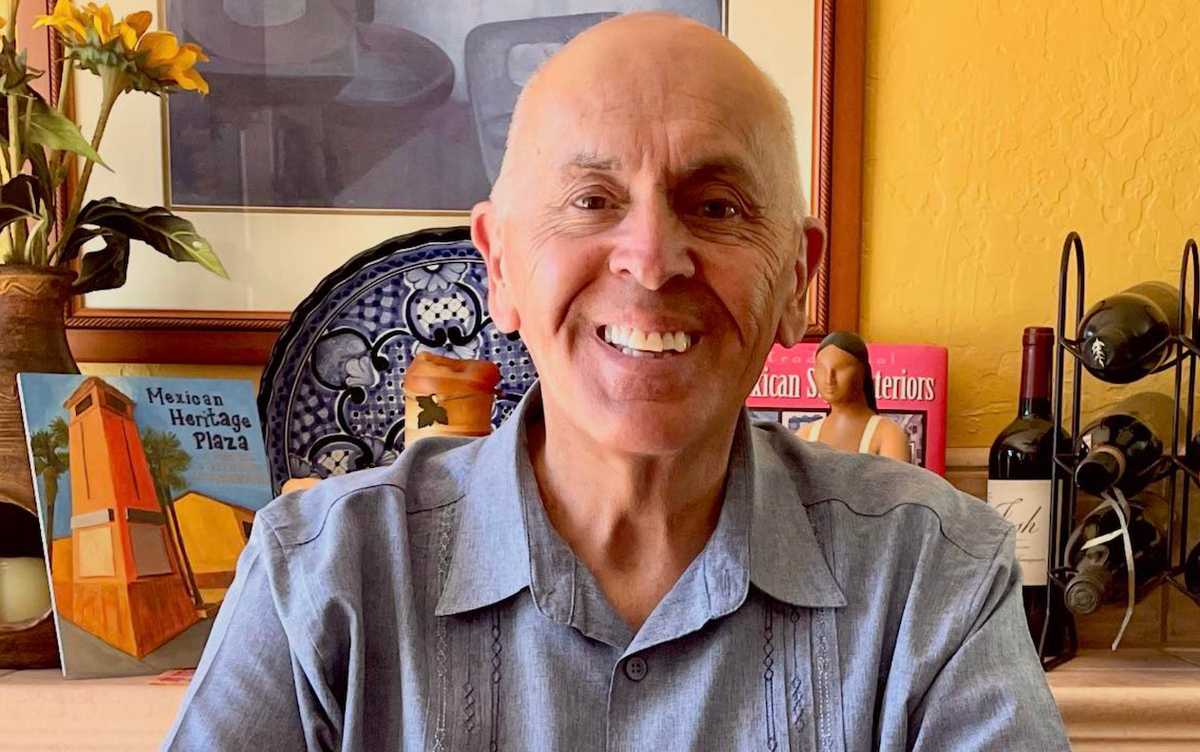
Silicon Valley Latino is proud to launch Raíces — Our Story, Our Narrative, a new editorial series honoring the historians, authors, and community builders who have dedicated their lives to preserving Latino history in the United States. Our first volume belongs to Eddie García, whose book Mexican Heritage Plaza: A Symbol of Resilience and Perseverance documents one of the most remarkable civic achievements in Silicon Valley's Latino community. Over 12 installments, Eddie will take us from San José's founding in 1777 to the grand opening of a cultural landmark that almost never got built. This is where our series begins — rooted, purposeful, and long overdue.
Author's Note by Eddie García
My new book, Mexican Heritage Plaza: A Symbol of Resilience and Perseverance, tells the exciting and colorful story of San José's rich Mexican history, from the founding of El Pueblo de San José de Guadalupe in 1777 to the grand opening of the Mexican Heritage Plaza in 1999.
The story starts with 66 settlers who hailed from Sonora, Sinaloa, Jalisco, Chihuahua, Puebla, and Mexico City. They established a settlement on the banks of the Guadalupe River. Before Silicon Valley emerged, their descendants, and immigrants who followed, built San José's first three major industries – quicksilver mining, cattle ranching, and agriculture. For over two centuries, San Jose historians ignored their contributions.
During the 1990s, a group of Mexican American civic leaders set out to change that narrative. In the face of opposition from the political establishment, the local media, and a segment of their own community, the civic leaders persevered with a commitment to build a Silicon Valley cultural icon in East San José.
Today's excerpt is from the prologue of Mexican Heritage Plaza: A Symbol of Resilience and Perseverance. It is the first installment in a 12-part series for SVL's Our Raíces – Our Story, Our Narrative. The book is available in paperback and on Kindle at Amazon (see below).
Mexican Heritage Plaza: A Symbol of Resilience and Perseverance
by Eddie García
Prologue
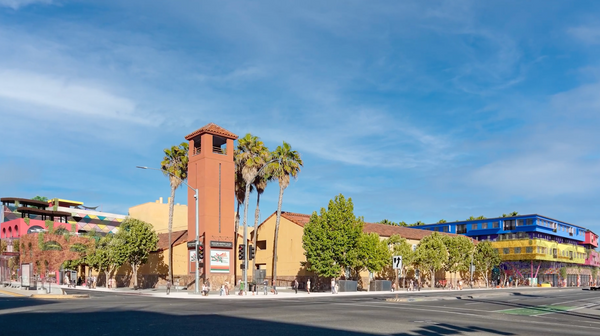
Photo Credit: San José Mercury News
September 9, 1999, was a beautiful day in San José, California. A large crowd gathered for the dedication of the Mexican Heritage Plaza, the city's most ambitious neighborhood cultural arts project. Although the first day of autumn was less than two weeks away, clear skies, a light breeze, and a comfortably warm 74 degrees blanketed the plaza. There was a sense of excitement, accomplishment, and relief that this day had finally come. It was as if the gods conspired to create a perfect day for the much-anticipated consecration of a living, breathing monument to the city's Mexican origins.
When the 1,000 or so people settled into their seats, Santa Clara County Supervisor Blanca Alvarado stood and walked up the few steps onto the stage to address the gathering. The audience included San José's political class, community activists, neighborhood leaders, and other guests. When she approached the podium, Alvarado opened her comments with equal parts passion and eloquence:
To be here with you at this official dedication is to stand in awe and wonder at what we have accomplished in the spirit of community. To stand here is to feel free at last from the stinging rejection that so many of us have felt for being Mexican-American. To be able to speak our language and to experience our cultura in its many forms is to acclaim our right to be.
With that opening flourish, Alvarado brought to light the city's Mexican roots, which white Americans had dismissed since their arrival in the late 1840s.
✦ ✦ ✦
The first human beings to occupy the land that is now San José, California, were the Ohlone people. They descended from nomads who migrated across a land bridge that connected modern-day Asia and North America in search of food and game about 15,000 to 30,000 years ago. Archaeologists believe that descendants of those wanderers settled in what is now the Santa Clara Valley 4,000 to 10,000 years ago.
In January 1777, Franciscan friars established the first European settlement in the valley by founding Mission Santa Clara de Asis. Eleven months later, a group of settlers representing the Spanish king founded El Pueblo de San José de Guadalupe just east of the river that dissected the two communities. Although they settled on the eastern bank of the Guadalupe River as subjects of Spain and under the orders of the Spanish government, all 66 people who established the camp were born in modern-day México. Contrary to assertions by 20th-century San José historians and those who claim to be descendants of the settlers, members of the 1777 group were most likely not culturally Spanish. They were ethnically Mexican.
From its founding in 1777 to 1822, the town was a colony of the Spanish Crown. The Mexican Empire and its successive governments ruled the people of San José from 1822 until the United States acquired the Pueblo as spoils of war in 1848.
With the influx of people from the United States traveling to California in search of fame and fortune during the 1849 Gold Rush, San José began its slow ascent as an industrial city. First, with quicksilver mining in the Almaden Hills, and later, with the robust canning business tied to the agricultural boom that created the Valley of Heart's Delight. During that time, Mexicans worked the mines, cultivated grain and vegetables in the fields, and harvested fruit trees that blanketed the valley floor and hillsides.
Beginning in the early 1950s, ethnic Mexicans unsuccessfully attempted to establish a cultural center to celebrate the city's Mexican birthright. Proposals from the 1950s, 1960s, and 1970s faced institutional roadblocks, financial challenges, and community divisions. Ultimately, none of these projects progressed beyond the idea phase.
Despite efforts by generations of San José's ruling class to marginalize the contributions of ethnic Mexicans to the city's development, a group of Mexican American civic leaders overcame seemingly impossible odds in the 1990s to build a state-of-the-art Mexican cultural center that would become a symbol of Mexican American resilience and perseverance.
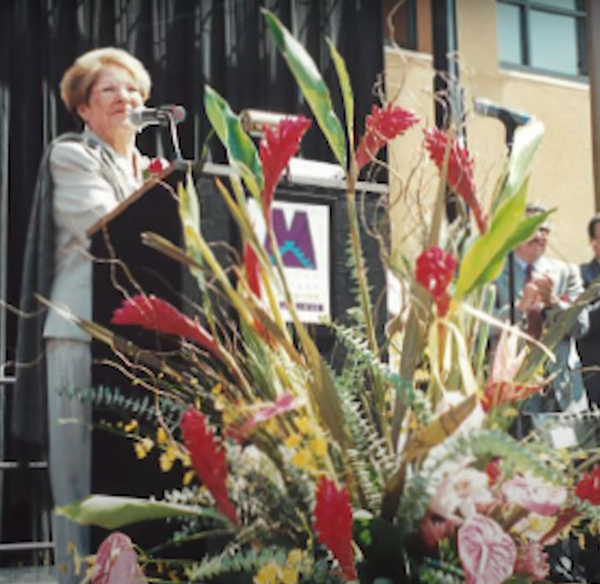
Photo Credit: Mexican Heritage Corporation
Get the Book
Mexican Heritage Plaza: A Symbol of Resilience and Perseverance by Eddie García is available in paperback and on Kindle.
Purchase on Amazon: amazon.com — Mexican Heritage Plaza
Stories like this don't tell themselves.
SVL has spent over a decade making the invisible visible by celebrating Latino excellence, naming hard truths, and calling our comunidad to action. Independent Latino journalism only survives when the community it serves decides it's worth protecting.
There are two ways to stand with us:
Are you a Latino professional, entrepreneur, or leader ready to be celebrated? Become a Cultura Ambassador — SVL's official community membership for Latino leaders who are ready to have their story told, their work amplified, and their excellence made visible.
Cultura Ambassador: svlatino.com/collections/join-our-tribe
Want to support our mission? Become an Amigo de SVL. Your support keeps our journalism independent, our stories free, and our #CreoEnTi programs and community events alive. No spotlight required. Just solidarity.
Amigo de SVL: svlatino.com/collections/join-our-tribe/products/amigo-de-svl
Juntos Adelante. Because silence is complicity. And so is inaction.