The Mexicans: How San José's Founders Were Written Out of Their Own City's History
Historian Eddie García examines how San José's Mexican founders were systematically erased from the city's own historical record and who finally told the truth.

Part 2: The Mexicans | By Eddie García
From Silicon Valley Latino
History is only as honest as the people who write it. In Part 2 of Raíces — Our Story, Our Narrative, Eddie García examines how San José's Mexican founders were systematically erased from the city's own historical record and who finally told the truth.
Missed Part 1? Start at the beginning → The Prologue
Author's Note
Despite being the first civil settlement in California, there exist few published historical works about the city. In 1871, an obscure attorney and amateur historian named Fredric Hall kept a diary of his youth in San José, which he later used to write The History of San José and Surroundings.
A century later, a Santa Clara University history professor published a coffee-table book titled San José, California's First City. The book acknowledges the presence of Mexicans in San José's history but offers no in-depth analysis of its implications for the city's development.
In 1985, an amateur historian named Clyde Arbuckle wrote the History of San Jose. Arbuckle provides no historical analysis of the 66 settlers from Mexico who settled on the banks of the Guadalupe River, nor of the generations of Latinos who followed. It is important to note that Arbuckle was not an academically educated or trained historian.
Today's excerpt, from Mexican Heritage Plaza: A Symbol of Resilience and Perseverance, provides a brief history of Mexicans and Mexican Americans in San Jose. It is the second installment in a 12-part series for SVL's Raíces — Our Story, Our Narrative. The book is available in paperback and on Kindle at Amazon (see below).
Mexican Heritage Plaza: A Symbol of Resilience and Perseverance
by Eddie García
The Mexicans
While the statement in the book's foreword that Clyde Arbuckle knew the city's history "better than any other" may have been accurate, the History of San Jose author only tells part of the story. Aside from an odd statement asserting that the settlers "were not the best material in the world for their task," Arbuckle provides no historical analysis at all, especially of the people who settled on the banks of the Guadalupe River. How Arbuckle concluded that the settlers "were not the best material" is anyone's guess.
In an April 15, 1778, letter to superiors, Felipe de Neve, Governor of Alta California, New Spain, wrote that he assigned "nine soldiers with farming experience" to settle El Pueblo de San José de Guadalupe. Fredric Hall's 1871 book describes the settlers as "skilled in agriculture." Those accounts confirm that the settlers were the best material for developing an agricultural community. Whatever the reason for Arbuckle's omission of the Mexican experience in San José, his manuscript does not provide a comprehensive or definitive history of the city and perpetuates the false narrative that Spaniards founded the Pueblo.
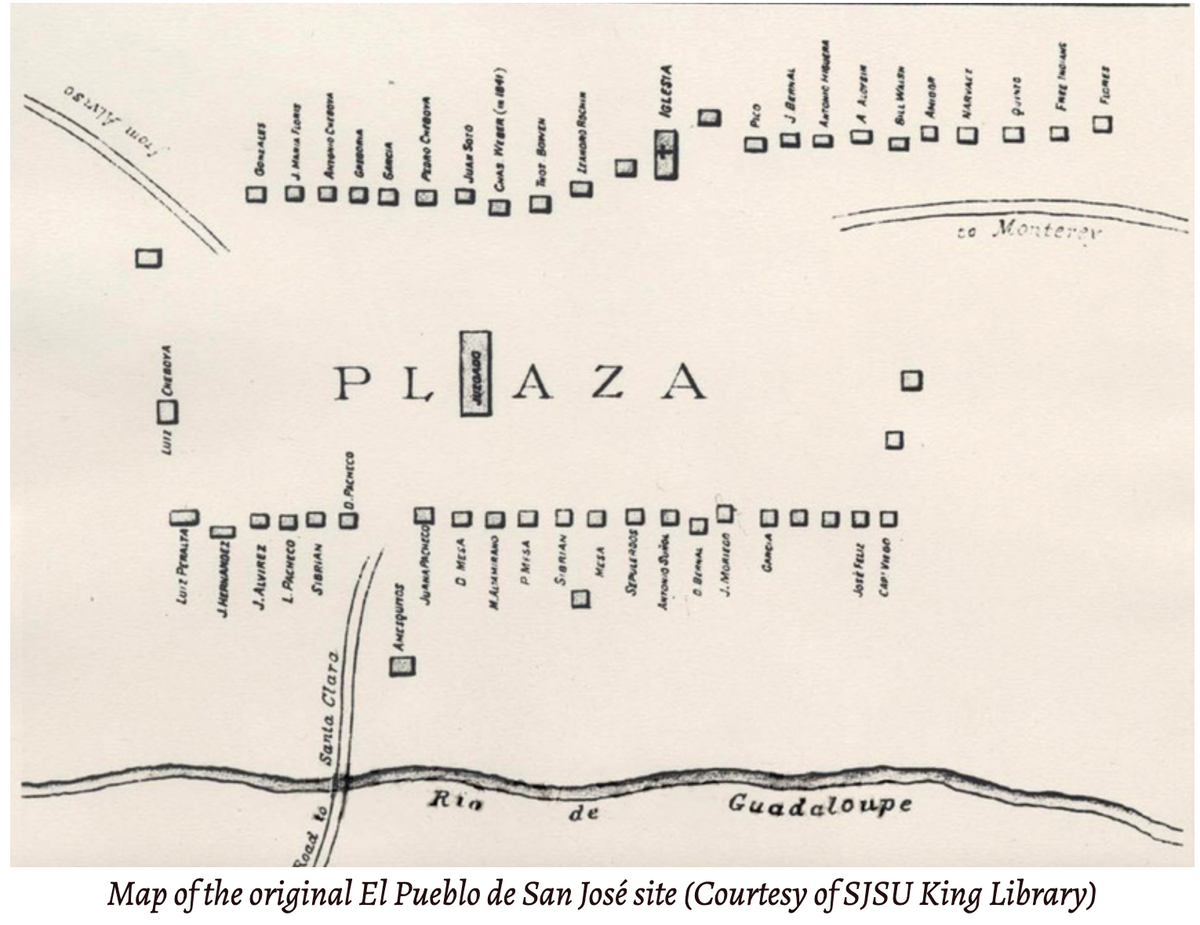
It wasn't until 2003, when Yale historian Stephen J. Pitti published The Devil in Silicon Valley, that historical works about San José correctly identified the Pueblo's founders as "ethnic Mexicans." In 2025, San José State University historian Gregorio Mora-Torres wrote a comprehensive account of what he calls the ethnic Mexican experience in San José. The facts, as chronicled by Pitti and Mora-Torres, are that each person in the small band of 66 pobladores (settlers) who pitched camp along the Guadalupe River was born in México, including the "Spanish" army captain José Joaquín Moraga, who led the expedition. He was born at the Mission Los Santos Ángeles de Guevavi in Sonora, México (now in modern-day Arizona).
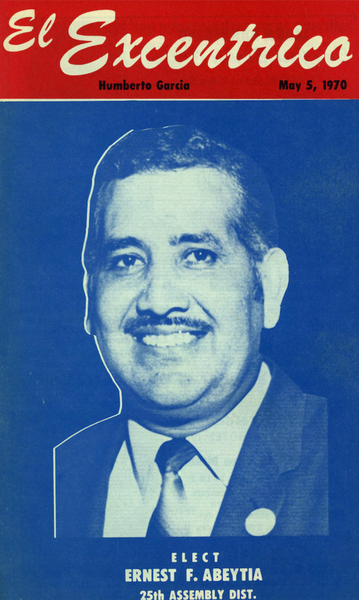
Photo Credit: SJSU Special Collections
Within a few years, San José's settlers were producing enough food to feed the military presidios in Monterey and San Francisco. By the mid-1780s, the Pueblo's leaders established a thriving community. Although still under the King of Spain's royal authority, the Mexican settlers established a "town council" in San José, launching a form of self-government in the faraway outpost settled by people from Sonora and Sinaloa, México.
In 1846, U.S. troops invaded México in a war of conquest. On the eve of the war, four out of every five people living in the Pueblo were Mexican. Through intermarriage and legal sleight of hand after the 1846-48 American War with México, Mexicans began to lose their land and influence in San José gradually. By the 1880 U.S. census, Mexicans made up only 6% of the town's population. This number is likely inaccurate as American officials probably undercounted Mexicans. Nonetheless, the Mexican population decreased significantly in the three decades following American statehood.
While ethnic Mexicans seemed to disappear from the written annals and minds of the white business and ruling class in San José, they continued to thrive and contribute to the city's development. Over 1,000 miners from Sonora, México, lived and worked in the quicksilver mines in the southern hillsides known as the misnamed Spanishtown. Immigrants from México and native-born descendants of the founders led cattle drives, cultivated crops, picked fruit, and worked in the growing canning industry, which was the valley's economic engine.
By the mid-20th century, a burgeoning ethnic Mexican middle class had emerged. The Mexican neighborhoods west of downtown thrived, with businesses lining Market Street. Dance halls hosted local talent and major musical acts from México. Radio programs featured personalities that read the news in Spanish and played the latest popular Latin music. During the late 1960s, Mexican and Mexican American business and community leaders were poised to take civic leadership roles in a town that their ancestors had founded almost 200 years earlier. The city's white ruling class had other plans.

Photo Credit: SJSU Special Collections
Get the Book
Mexican Heritage Plaza: A Symbol of Resilience and Perseverance by Eddie García is available in paperback and on Kindle.
Purchase on Amazon: amazon.com — Mexican Heritage Plaza
Stories like this don't tell themselves.
SVL has spent over a decade making the invisible visible — celebrating Latino excellence, naming hard truths, and calling our comunidad to action. Independent Latino journalism only survives when the community it serves decides it's worth protecting.
There are two ways to stand with us:
Are you a Latino professional, entrepreneur, or leader ready to be celebrated? Become a Cultura Ambassador — SVL's official community membership for Latino leaders who are ready to have their story told, their work amplified, and their excellence made visible.
Cultura Ambassador: svlatino.com/collections/join-our-tribe
Want to support our mission? Become an Amigo de SVL. Your support keeps our journalism independent, our stories free, and our #CreoEnTi programs and community events alive. No spotlight required. Just solidarity.
Amigo de SVL: svlatino.com/collections/join-our-tribe/products/amigo-de-svl
Juntos Adelante. Because silence is complicity. And so is inaction.