The Tech Museum and the Children's Discovery Museum Stand on the Ashes of La Colonia
Before the Tech Museum and the Children's Discovery Museum, there was La Colonia. Eddie García documents how San José's urban renewal policies demolished a thriving Mexican neighborhood. Part 6 of Raíces — Our Story, Our Narrative.

Part 6: Rise and Fall of the Mid-20th Century Latino Middle Class | By Eddie García
From Silicon Valley Latino
Two of Silicon Valley's most beloved cultural institutions sit on land that was once a thriving Mexican neighborhood. The Tech Museum of Innovation. The Children's Discovery Museum. Before they were landmarks, La Colonia was. In Part 6 of Raíces — Our Story, Our Narrative, Eddie García documents how San José's urban renewal policies demolished a community, its ballrooms, its press, and its people, to build something the city found more valuable than its community members.
Missed Part 5? Read José Antonio Chaboya. Start from the beginning with Part 1: The Prologue.
Authors Note:
At the turn of the 20th century, ethnic Mexicans were still toiling away in the declining New Almaden quicksilver mines and the burgeoning fields and orchards of the Valley of Heart's Delight. According to the U.S. Federal Census of Population, the Mexican American population in Santa Clara County in 1900, 1910, and 1920 was 554, 627, and 911, respectively.
By 1920, nearly 30% of the county's ethnic Mexican population was foreign-born. These numbers could be higher because census takers often underestimated the number of Mexicans living in Santa Clara County, especially those working in the fields, as refugees from the 1910 Mexican Revolution began arriving in large numbers. Between 1910 and 1929, about 661,000 Mexicans officially entered the United States as immigrants.
Despite the low census counts in 1900-1920, white San Joseans could see the Mexican population growing before their eyes. The powers that be in San José referred to the area west of downtown as Mexican Town. Residents of the neighborhood called it La Colonia (The Neighborhood). Politicians, union bosses, and Protestant church leaders made sure that ethnic Mexicans in San José did not feel welcome through structurally racist policies and practices.
Today's excerpt, from Chapter 5 (The Rise and Fall of Los Excéntricos) of Mexican Heritage Plaza: A Symbol of Resilience and Perseverance, tells the story of how residents of La Colonia built a thriving community west of downtown during the mid-20th century only to experience its demise as a result of city policies. It is the sixth installment in a 12-part series for SVL's Raíces — Our Story, Our Narrative. The book is available in paperback and on Kindle at Amazon: amazon.com — Mexican Heritage Plaza.
Mexican Heritage Plaza: A Symbol of Resilience and Perseverance
by Eddie García
Chapter 5
The Rise and Fall of Los Excéntricos
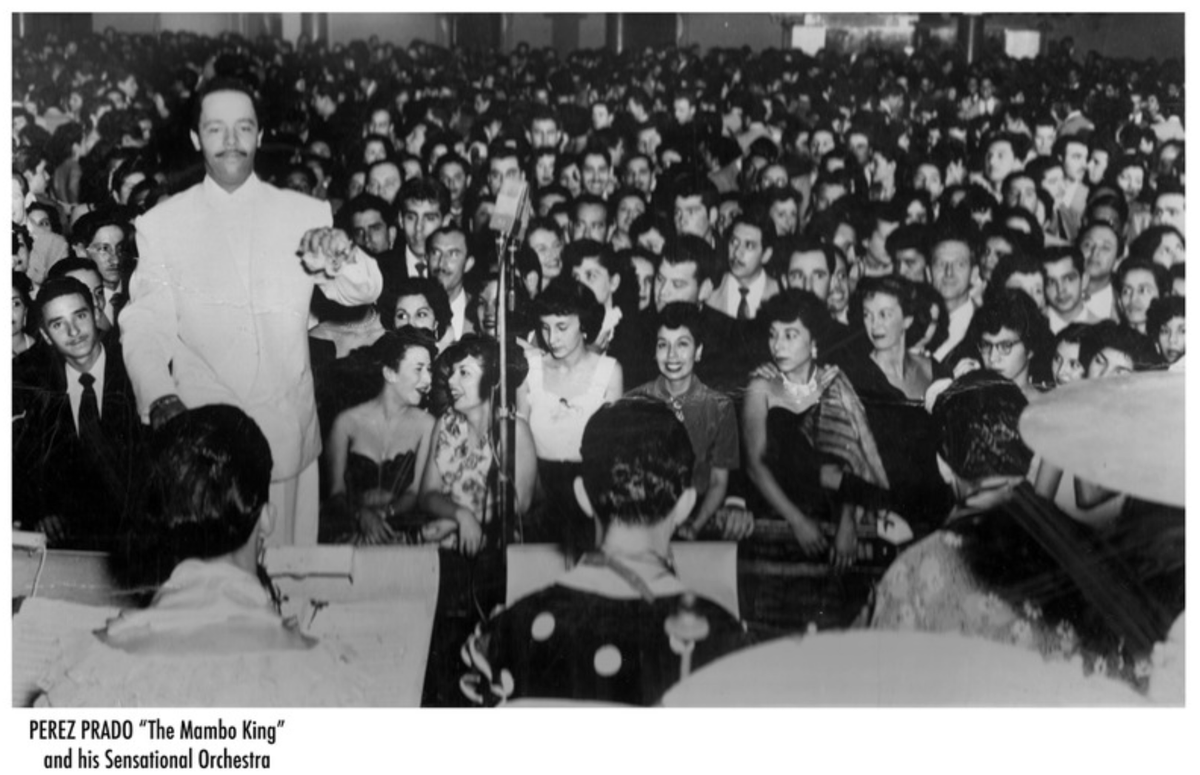
The Palomar Ballroom. San José, California. Circa early-1950s. Pérez Prado and his Orchestra were belting out Mambo #5, the famous smash hit that took the United States by storm. The Cuban-born bandleader from México City, who popularized the mambo dance craze, loved playing the Palomar Ballroom when he swung through San José. His three singers, Las Hermanas Montoya, were San José natives. Mexicans from throughout the Bay Area packed the house and the dance floor.
The city built The Palomar Ballroom in 1946 on the northeast corner of Notre Dame Avenue and Carlysle Street in downtown San José, two blocks west of the present-day San Pedro Square. It was the first significant building constructed in the city after World War II. Built for the Big Band Era, the ballroom hosted major musical acts like Ray Charles and Fats Domino. Ethnic Mexican promoters also attracted acts from México and Latin America. Historians consider it the first integrated dance hall in San José.

Photo Credit: San Jose Mercury News
The building changed with the times, hosting rock and roll and rock acts, as well as a discotheque, from the 1960s through the late 1990s. The structure was eligible for the California Register of Historic Resources and the National Register of Historic Places in part for “the building's role in the preservation of the diverse social and cultural traditions of the Latino community in Santa Clara Valley.” Despite the historic value of the original Palomar, the grand ballroom building was demolished in 2005 to make way for a high-rise residential development.
The high-rise development, however, was some 50 years into the unknown future for the revelers dancing to Pérez Prado and his Orchestra. The orchestra included up to 14 musicians playing trumpets, saxophones, trombones, a drum set, timbales, congas, and a stand-up bass. The energetic music filled the high-ceilinged, cavernous room. Women dressed in evening gowns, cocktail dresses, high-heeled shoes, and white or cream-colored elbow-length gloves. Men wore neatly pressed dark suits, crisp white dress shirts, colorful ties, and polished shoes.
Couples danced the mambo cheek to cheek as they stepped back and forth, and side to side, while sensually swiveling their hips to intoxicating rhythms. Gentlemen flipped open shiny lighters to light cigarettes for themselves and their dates. Cigarette smoke hovered just slightly above the dance floor. With cocktails in hand, those not dancing chatted, laughed, and enjoyed a lovely evening out on the town.
La Colonia also had its own press outlets. Perhaps the most influential of these was El Excéntrico, a small 5½ by 8¾-inch magazine that published 30 to 40 pages each month. The magazine shared local news, culture, fashion trends, politics, and society gossip in English and Spanish. San José's Mexican American middle class had arrived.
✦ ✦ ✦
During the first half of the 20th century, major downtown retailers like JCPenney, Montgomery Ward, and Sears, along with the large, locally owned Hart's Department Store, served most San José residents. From the 1950s to the 1970s, downtown San José east of La Colonia also bustled with activity until major retailers and many white residents began moving to the affluent neighborhoods sprouting on the outskirts of town.
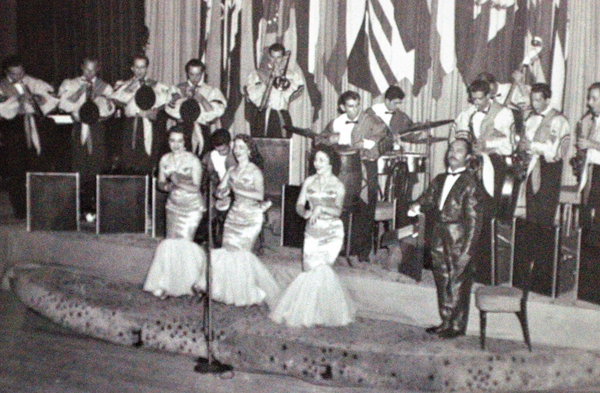
Photo Credit: La Raza Historical Society
The city declined to invest in the thriving Mexican business corridor along Market Street. Instead, to counter white flight to the suburbs, City officials sought to revive downtown through “urban renewal.” Public policy actions by the San José City Council during the 1960s and 1970s would literally cause the “demolition” of La Colonia and its dynamic business district. These decisions also indirectly led to the downfall of El Excéntrico itself and the exciting era described in its pages.
Hundreds of ethnic Mexican families were displaced to make room for San José's urban renewal projects. The main library on San Carlos Street in 1970 and the Center for Performing Arts in 1972. Major San José cultural venues like the Tech Museum of Innovation and the Children's Discovery Museum, both valuable community assets, sit on the ashes of a once-thriving ethnic Mexican community.
Through it all, Mexican Americans endured like the ever-present avena barbata swaying in the howling winds of a winter storm. When the wind and rain stopped, San José's ethnic Mexican community stood tall like the slender wild oak that covered the east foothills, ready to face the last two decades of the 20th century.
Get the Book
Mexican Heritage Plaza: A Symbol of Resilience and Perseverance by Eddie García is available in paperback and on Kindle.
Purchase on Amazon: amazon.com — Mexican Heritage Plaza
Stories like this don't tell themselves.
SVL has spent over a decade making the invisible visible — celebrating Latino excellence, naming hard truths, and calling our comunidad to action. Independent Latino journalism only survives when the community it serves decides it's worth protecting.
There are two ways to stand with us:
Are you a Latino professional, entrepreneur, or leader ready to be celebrated? Become a Cultura Ambassador — SVL's official community membership for Latino leaders who are ready to have their story told, their work amplified, and their excellence made visible.
Cultura Ambassador: svlatino.com/collections/join-our-tribe
Want to support our mission? Become an Amigo de SVL. Your support keeps our journalism independent, our stories free, and our #CreoEnTi programs and community events alive. No spotlight required. Just solidarity.
Amigo de SVL: svlatino.com/collections/join-our-tribe/products/amigo-de-svl
Juntos Adelante. Because silence is complicity. And so is inaction.