
The Founding of El Pueblo de San José: A 22-Day Journey Into History
Eddie García reconstructs the 22-day journey that 66 Mexican settlers took from San Francisco to found El Pueblo de San José de Guadalupe in 1777.

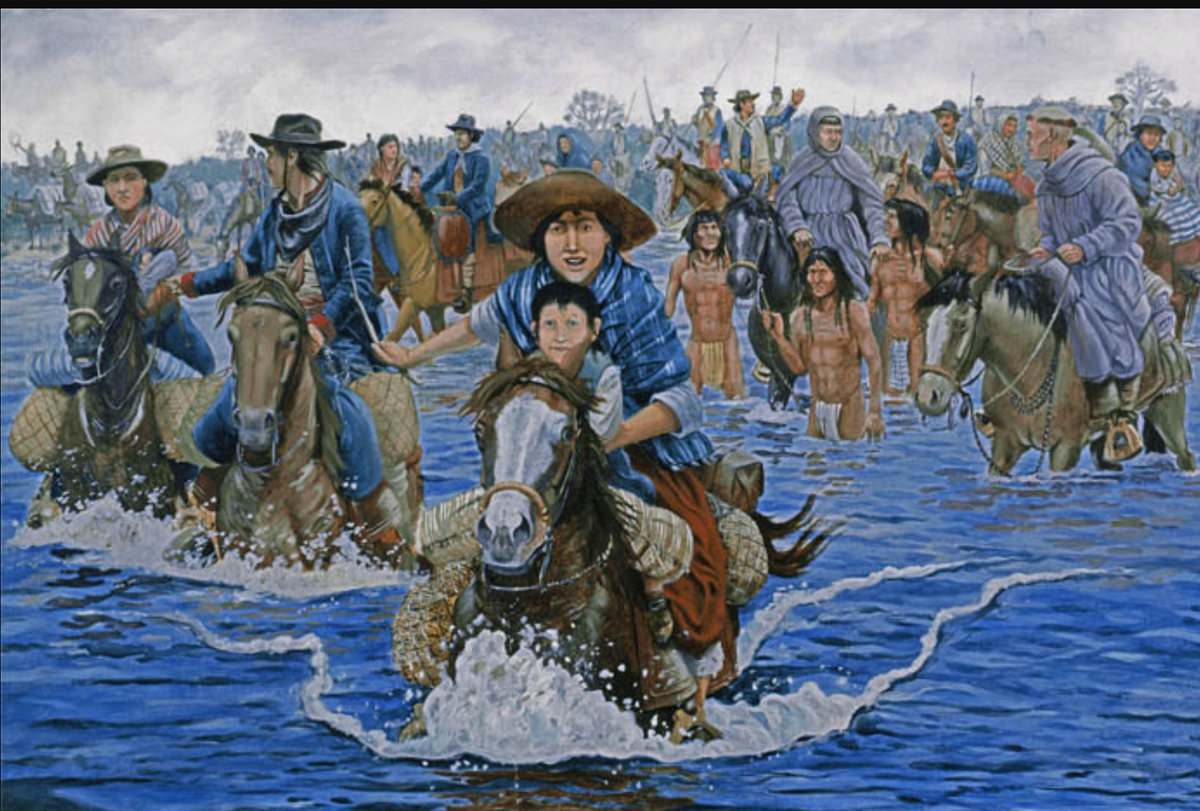
Part 3: The Founding of El Pueblo de San José | By Eddie García
From Silicon Valley Latino
For millennia, the fog has ebbed and flowed over the Santa Cruz Mountains into the Bay Area like waves washing onto a shore. It carries with it the stories that certain historians chose to ignore, the 66 Mexicans, the 200 animals, the three weeks of mud and silence along a trail no one had yet named that became the founding of San José de Guadalupe. It took someone like Eddie García to walk into that fog, reach in, and pull the history out piece by piece. In Part 3 of Raíces — Our Story, Our Narrative, he brings it back.
Missed Part 2? Read The Mexicans. Start from the beginning with Part 1: The Prologue.
Author's Note
José Joaquín Moraga was born at the Mission Los Santos Angeles de Guevavi in modern-day Sonora, México, located about 15 miles north of the current United States/Mexican border. His parents were also born in Sonora. The Mexican-born officer in the Spanish army was the second-in-command of the historic De Anza expedition that explored California and helped build a military outpost (presidio) in San Francisco in 1776.
To strengthen its presence in its newly conquered territory, Spain planned a three-pronged approach to settlement: military presidios, missions, and civilian pueblos. The Spanish crown focused on developing towns to establish roots in California. The Viceroy of México called on Moraga to lead the expedition of 66 Mexican settlers to locate the first pueblo.
The Governor of Alta California directed Moraga to look for a site in a lush valley south of the San Francisco presidio. Moraga recruited nine men and their families from the presidio for the journey south. He made sure that the men and women had farming experience. Moraga also allocated livestock to each family. Sixty-six resilient Mexicans and their animals left the presidio in San Francisco on the morning of November 7, 1777.
Today's excerpt, from Chapter 1 (El Pueblo de San José de Guadalupe) of Mexican Heritage Plaza: A Symbol of Resilience and Perseverance, recreates the three-week journey from San Francisco to San José. It is the third installment in a 12-part series for SVL's Raíces — Our Story, Our Narrative. The book is available in paperback and on Kindle at Amazon: amazon.com — Mexican Heritage Plaza.
Mexican Heritage Plaza: A Symbol of Resilience and Perseverance
by Eddie García
Chapter 1
El Pueblo de San José de Guadalupe
On what was most likely a typical foggy San Francisco morning, a servant to Lieutenant Moraga named José Sinova, a blacksmith born in México City, rounded up cattle to prepare for the journey south on November 7, 1777. Including his wife, born in Villa Sinaloa, México, the expedition would include 66 people.
Earlier in the year, the Spanish viceroy in México City tasked the governor of California with establishing civil settlements to support the missions and military outposts. The governor visited locations near missions and/or presidios in San Diego, Monterey, San Francisco, and Santa Clara. The area near Santa Clara had the most potential to succeed as an agricultural community.
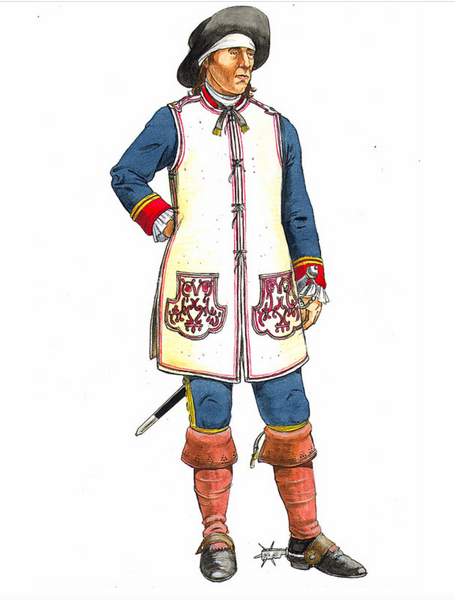
Photo Credit: National Park Service
All 66 of those hardy souls who were scurrying around to get ready for the journey to an unknown wilderness on that foggy morning at the San Francisco Presidio were born in México. They hailed from Sonora, Sinaloa, Jalisco, Chihuahua, Puebla, and México City. The viceroy allotted each family two cows, two oxen, two horses and mares, two sheep, two goats, and one mule to get started in their new venture. It was a veritable 18th-century Noah's Ark on land.
Moraga didn't keep a diary, and there is no record of the 22-day trek. There is little doubt that the lieutenant followed the same route down the peninsula that he had helped forge northward with the De Anza expedition the year before. The march south was probably a slog as the 60-plus humans and 200-plus animals stomped along a foggy, possibly muddy trail. There are no historical weather records from the 18th century. Still, weather patterns over the past 150 years indicate that the average temperature in November along the De Anza Trail has been 62 degrees during the day and 48 degrees at night, with just a few days of rain.
Compared to the average 10-15 miles per day covered by the original De Anza expedition, San José's founding party was moving at a deliberate pace. The expedition covered just 50 miles or so in 22 days, averaging 2.25 miles per day. It is possible that November 1777 was stormy, miring the group in thick, sticky mud. Or perhaps they camped for a few days at each stop to rest, hunt, and gather food to supplement the provisions they packed for the trip.
Regardless of the reasons, it took the Mexican pobladores nearly three weeks to complete the 50-mile journey; they arrived on the east bank of the river that dissected the beautiful green valley on the morning of November 29, 1777. In the name of the Spanish king, Moraga named the new community El Pueblo de San José de Guadalupe. The first part of the name was in honor of St. Joseph, and the second part to celebrate La Virgen de Guadalupe de Tepeyac, the patron saint of México.
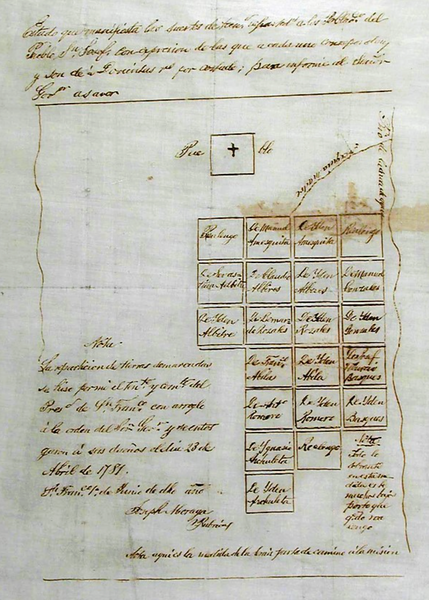
Photo Credit: History San Jose
Moraga left no record of why he chose to honor San José (St. Joseph) as the namesake for the new settlement. Catholics traditionally celebrate St. Joseph on March 19th, not November 29th. To be sure, St. Joseph's feast day did not inspire the name. St. Joseph is the patron saint of families, fathers, expectant mothers, travelers, immigrants, and working people, a description that perfectly describes the founding party.
Maybe Moraga was honoring his fellow founders. Adding Guadalupe to the Pueblo's name is more apparent. The story of La Virgen de Guadalupe de Tepeyac recounts the miraculous appearance of the Virgin Mary to a native Mexican named Juan Diego on Tepeyac Hill, near modern-day México City, in 1531. La Virgen placed her image on a cloak so Juan Diego could prove to Spanish authorities that she existed. As the patron saint of México, La Virgen de Guadalupe provides divine maternal protection and mercy to the people of the Americas. Moraga was likely asking La Virgen to bless and protect the new settlement.
With San José and La Virgen guiding and protecting them, the pobladores from México, via the Presidio of San Francisco, pitched camp next to a river that would feed the thirsty crops they were soon to plant. The river also carried their patron saint's name. The Mexican town of El Pueblo de San José de Guadalupe was born.
Get the Book
Mexican Heritage Plaza: A Symbol of Resilience and Perseverance by Eddie García is available in paperback and on Kindle.
Purchase on Amazon: amazon.com — Mexican Heritage Plaza
Stories like this don't tell themselves.
SVL has spent over a decade making the invisible visible — celebrating Latino excellence, naming hard truths, and calling our comunidad to action. Independent Latino journalism only survives when the community it serves decides it's worth protecting.
There are two ways to stand with us:
Are you a Latino professional, entrepreneur, or leader ready to be celebrated? Become a Cultura Ambassador — SVL's official community membership for Latino leaders who are ready to have their story told, their work amplified, and their excellence made visible.
Cultura Ambassador: svlatino.com/collections/join-our-tribe
Want to support our mission? Become an Amigo de SVL. Your support keeps our journalism independent, our stories free, and our #CreoEnTi programs and community events alive. No spotlight required. Just solidarity.
Amigo de SVL: svlatino.com/collections/join-our-tribe/products/amigo-de-svl
Juntos Adelante. Because silence is complicity. And so is inaction.
#JuntosAdelante #CreoEnTi #WeAreSVL #SVLVoices #LatinoHeritage #Raíces #CreoEnNosotros #SilenceIsComplicity